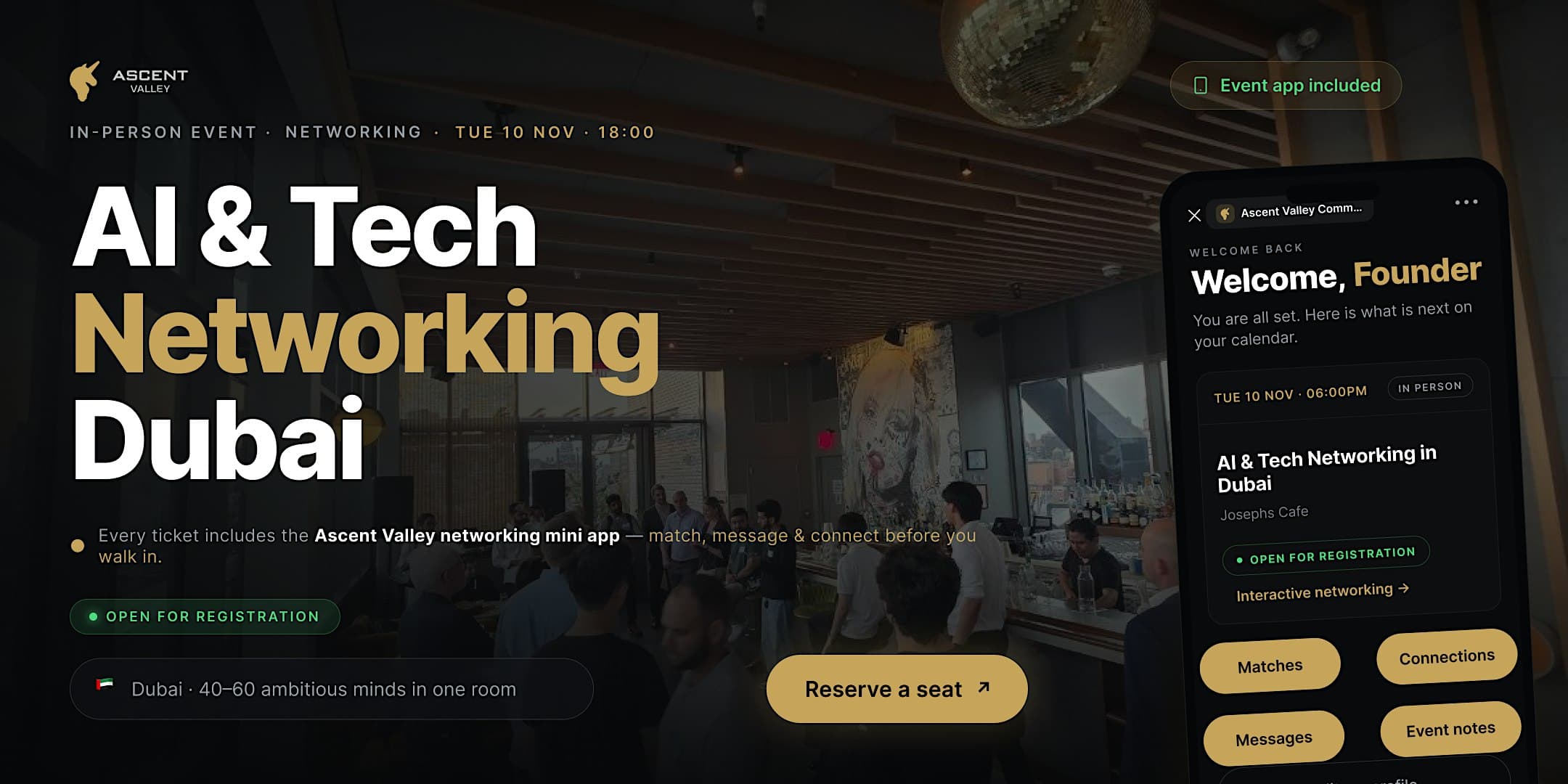
One format an evening, a room small enough to finish a conversation, and every guest checked in against the list at the door. Pick a city, pick a date.
Both run the same way: a table on a topic the room voted for, five minutes each on stage, then an open hour. What changes is who is in the room.
Five founders, five minutes35 upcoming
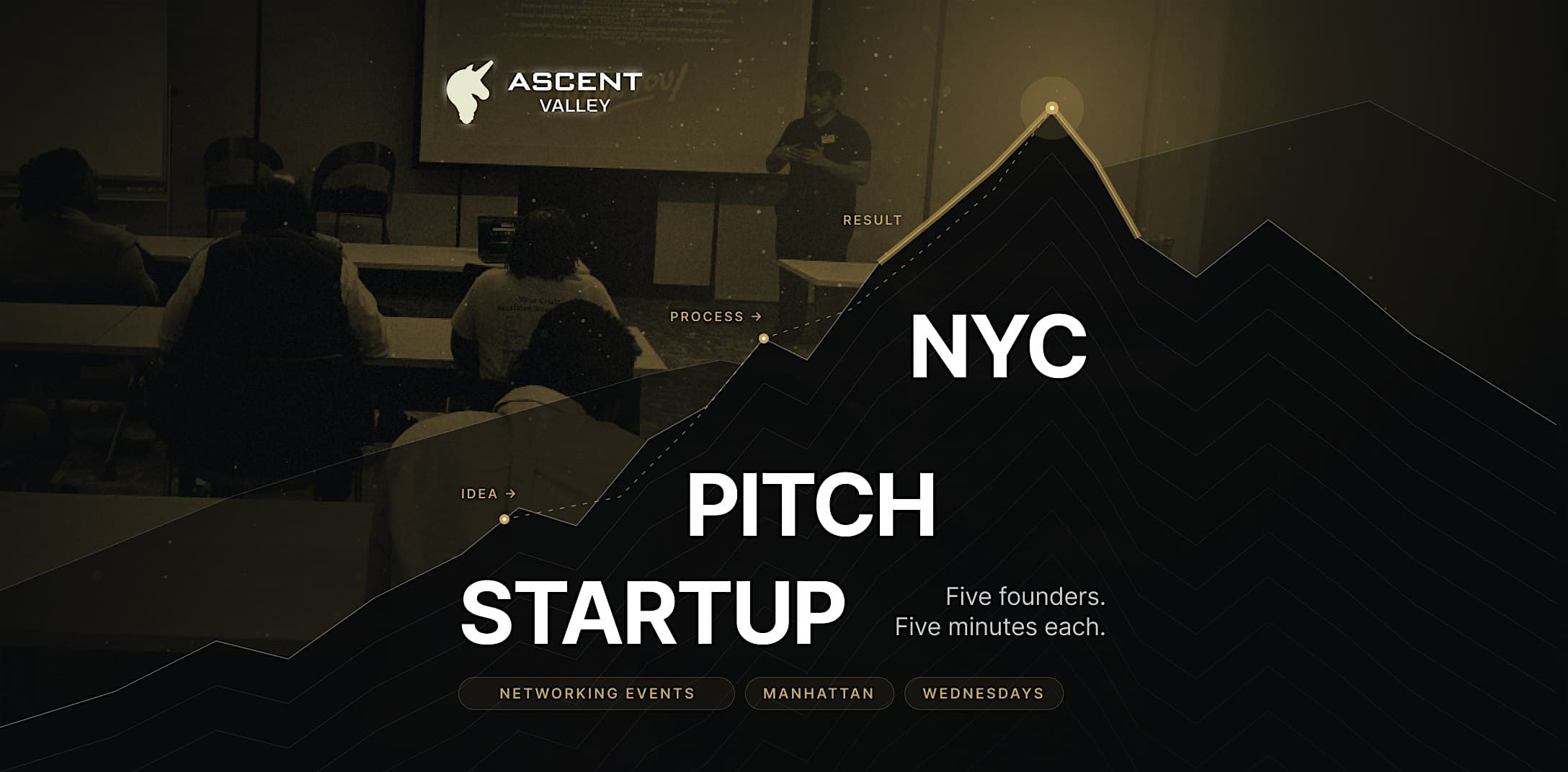
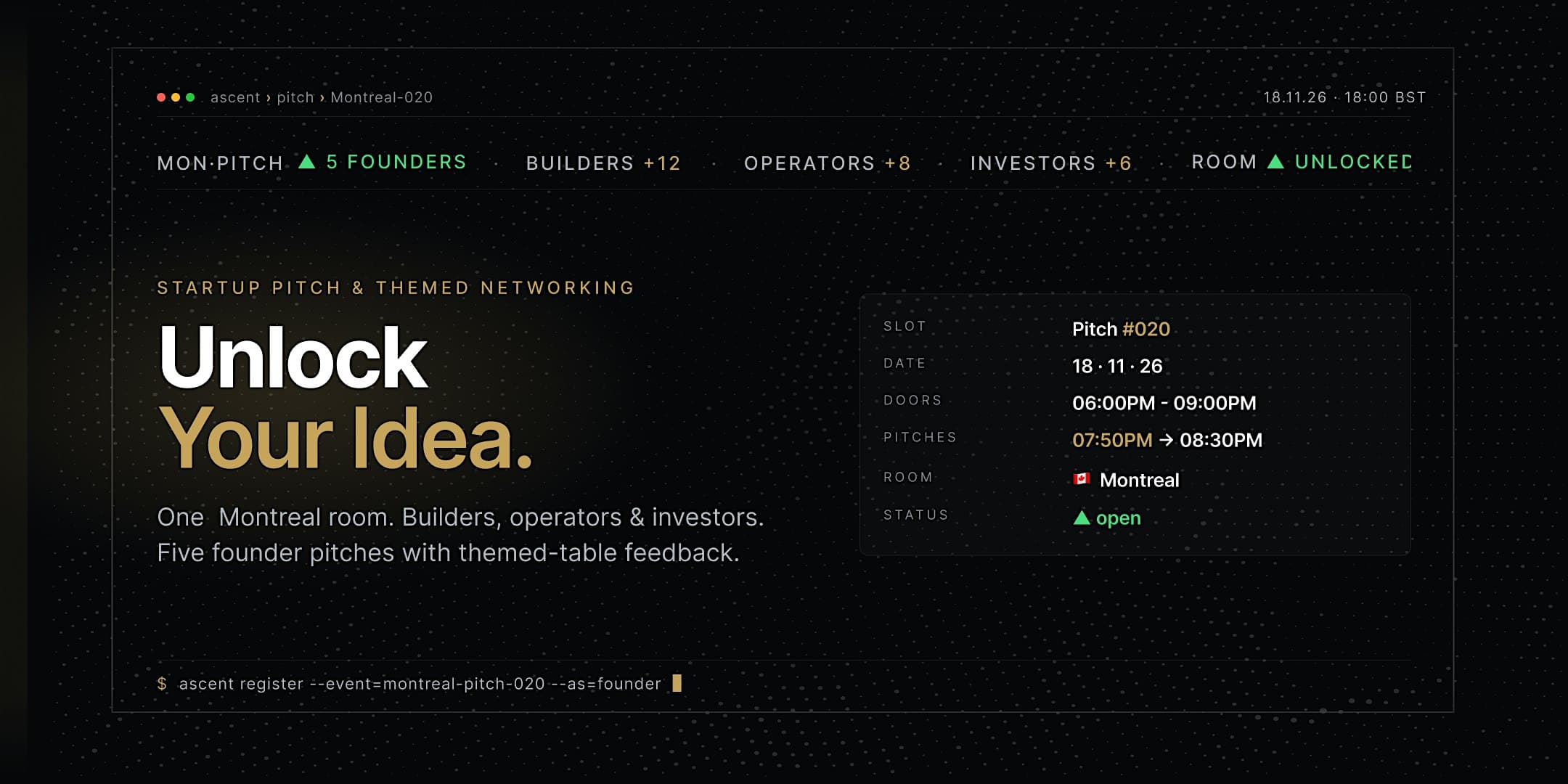
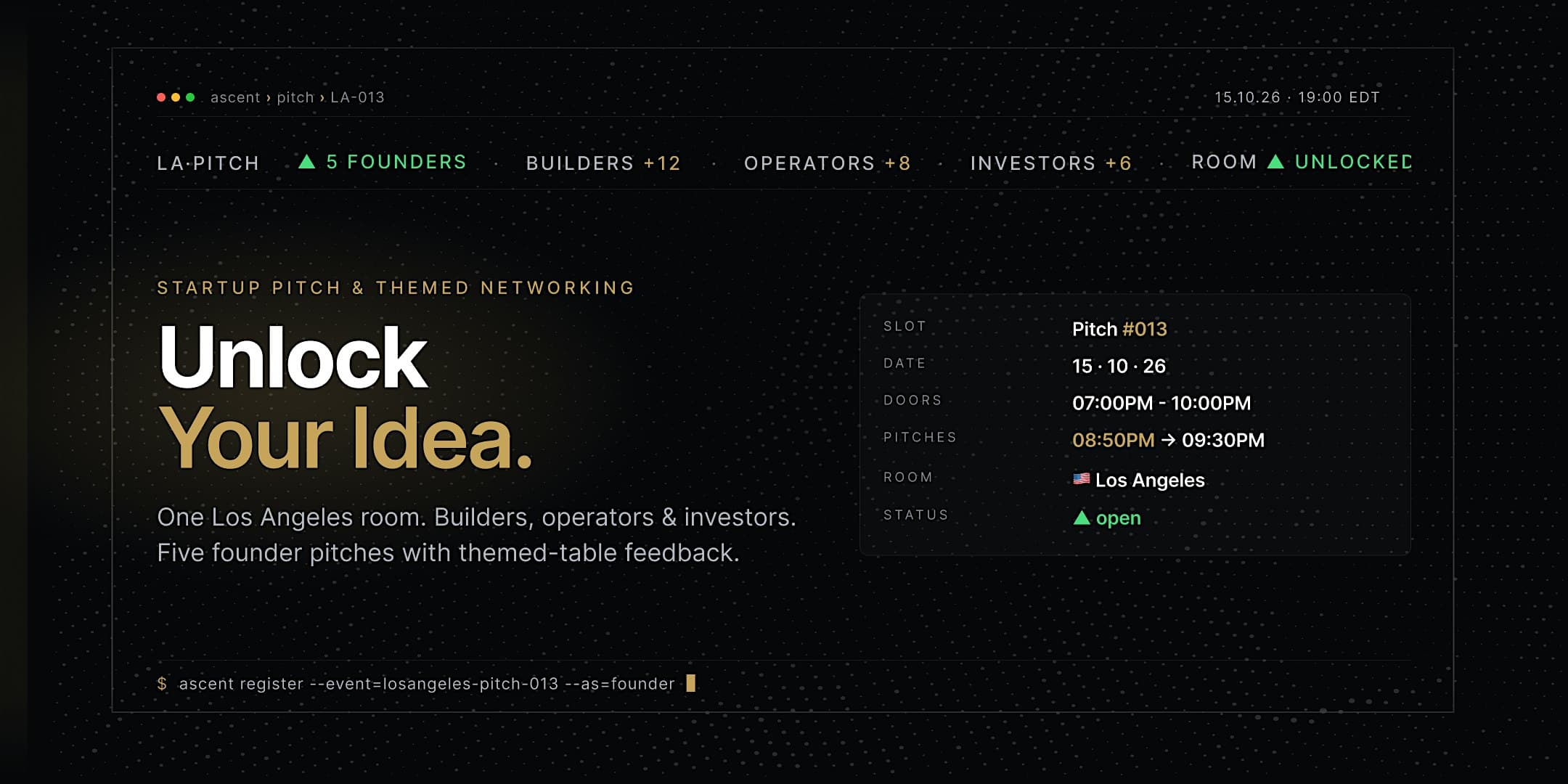
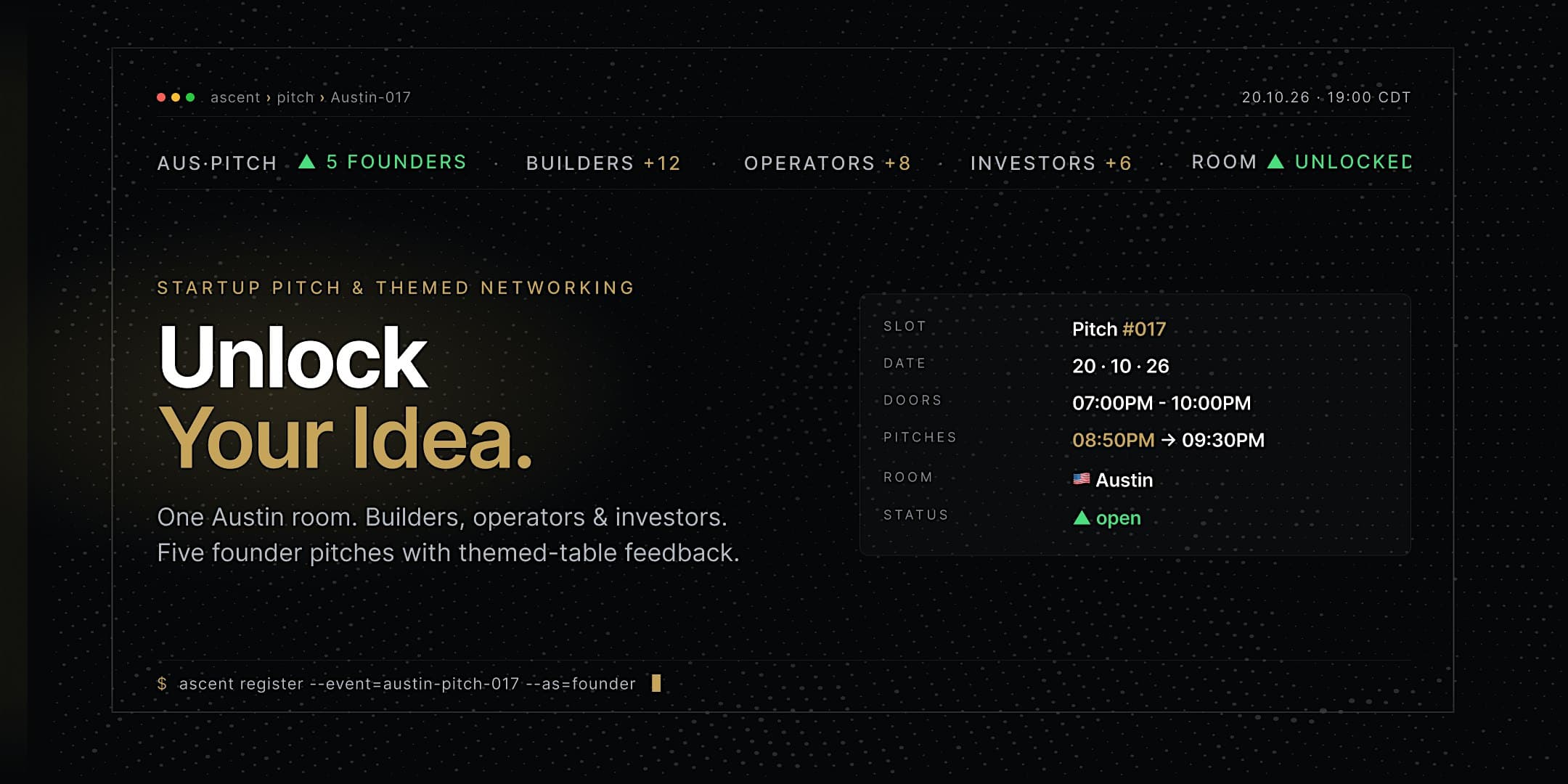
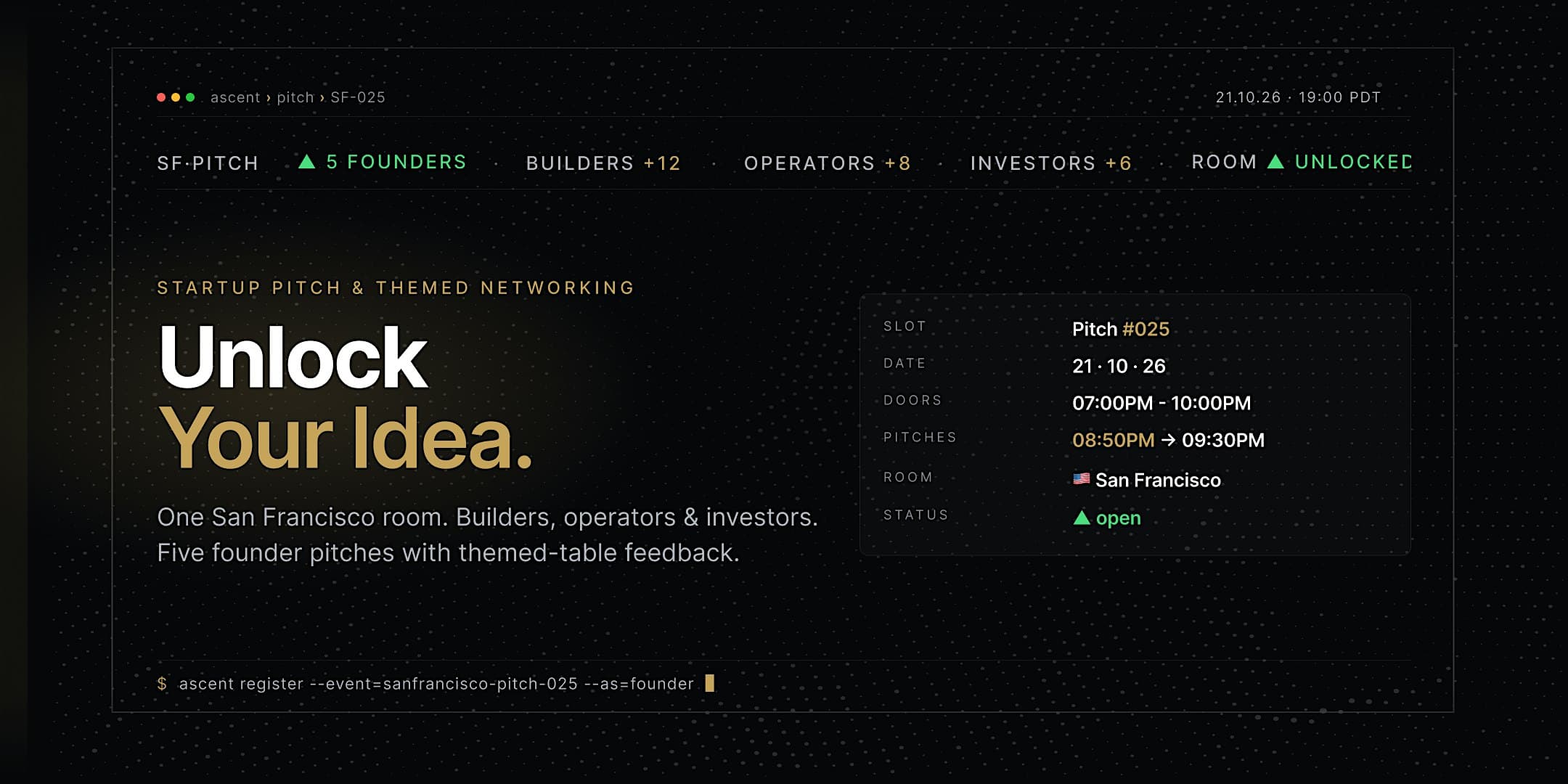
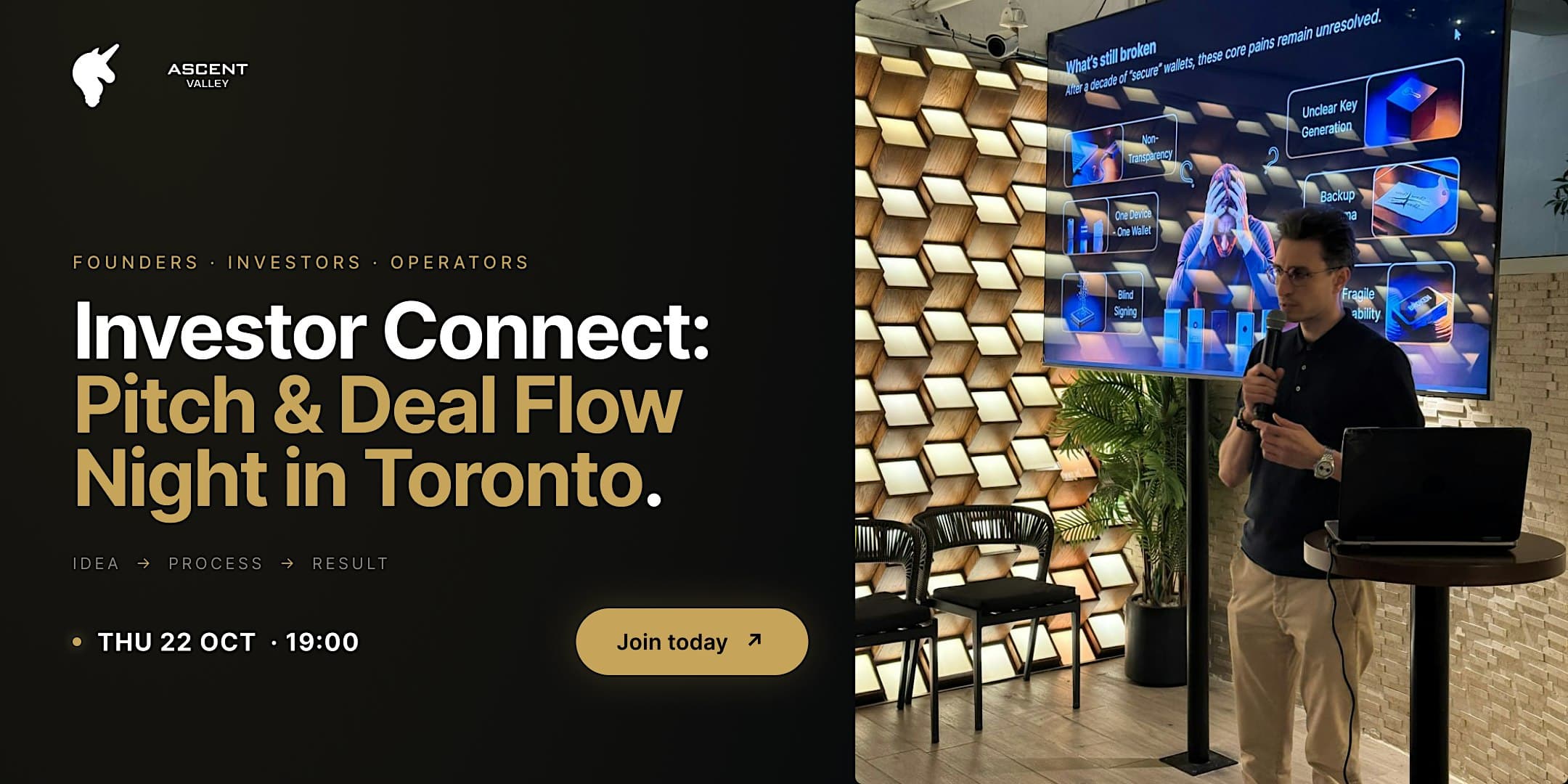
Startup Pitch: 5 Founders on Stage
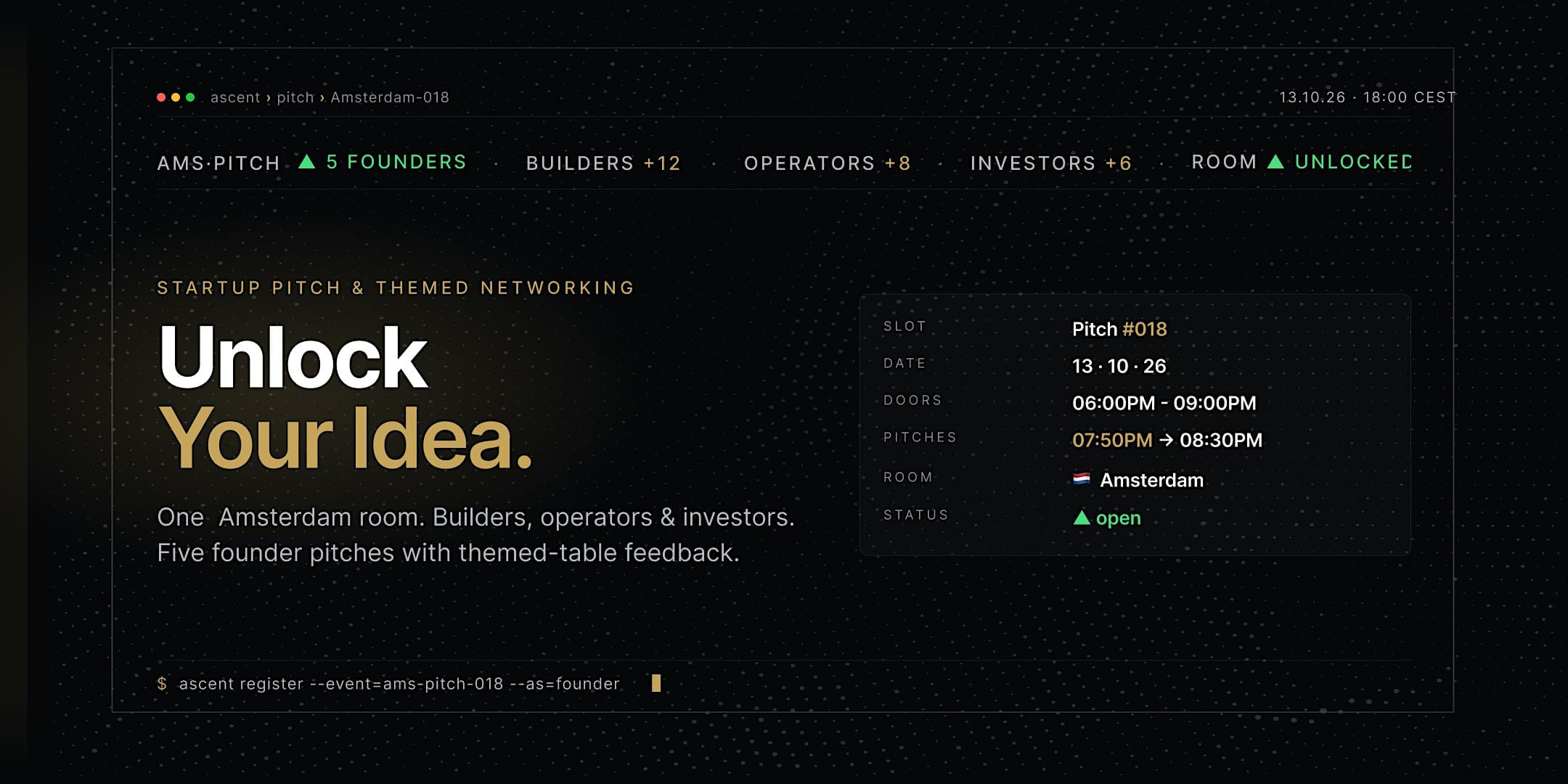
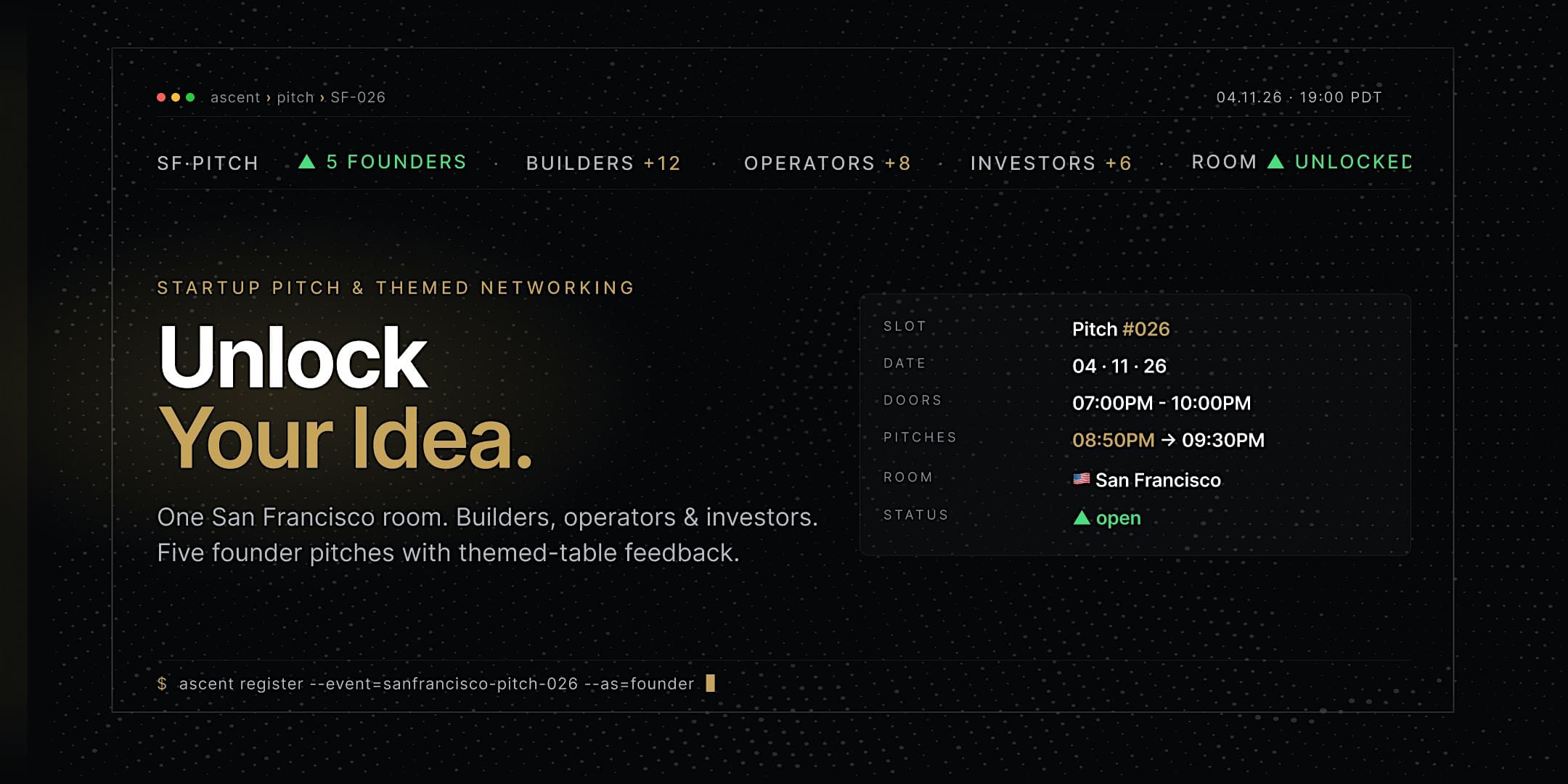
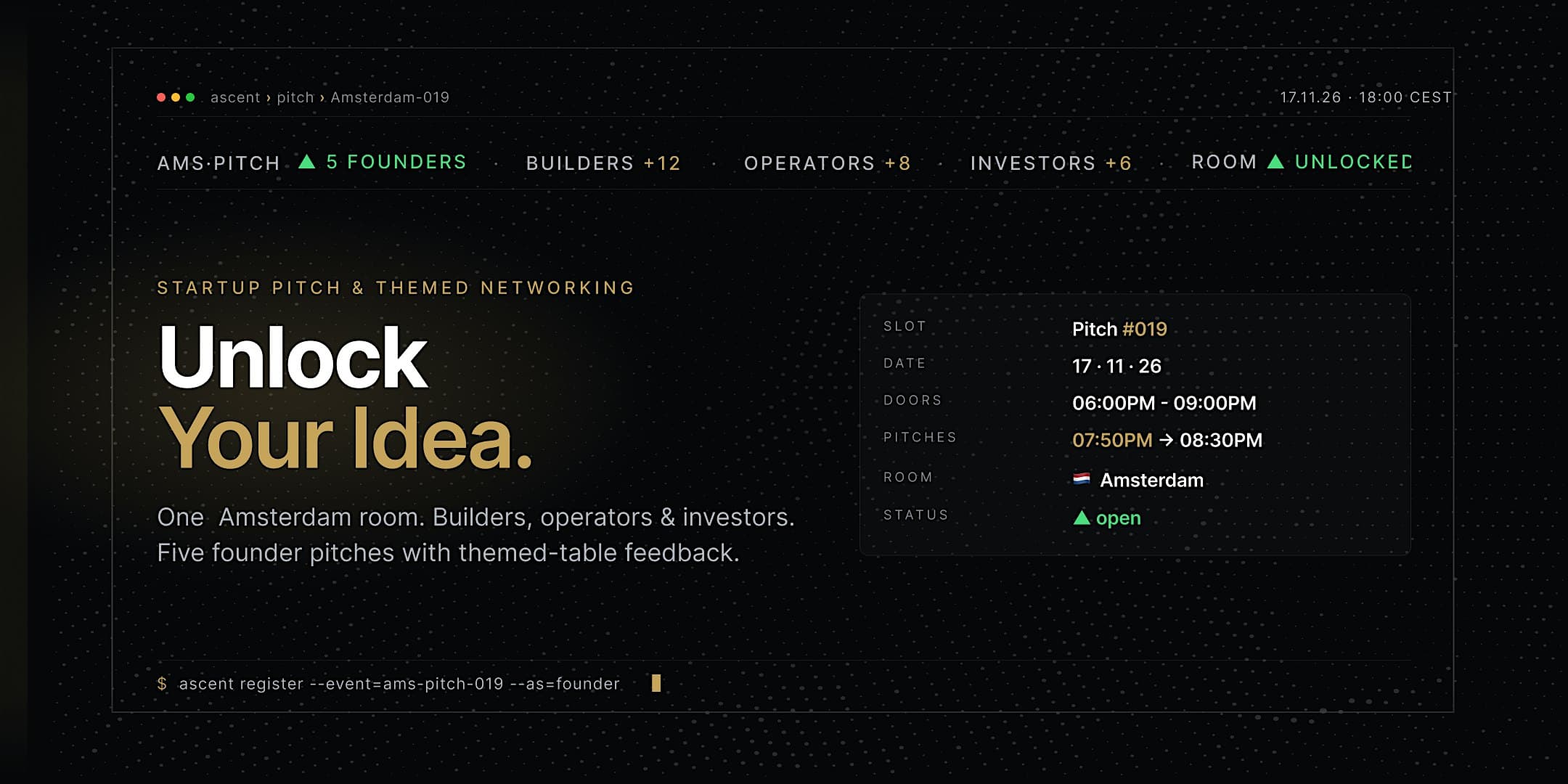
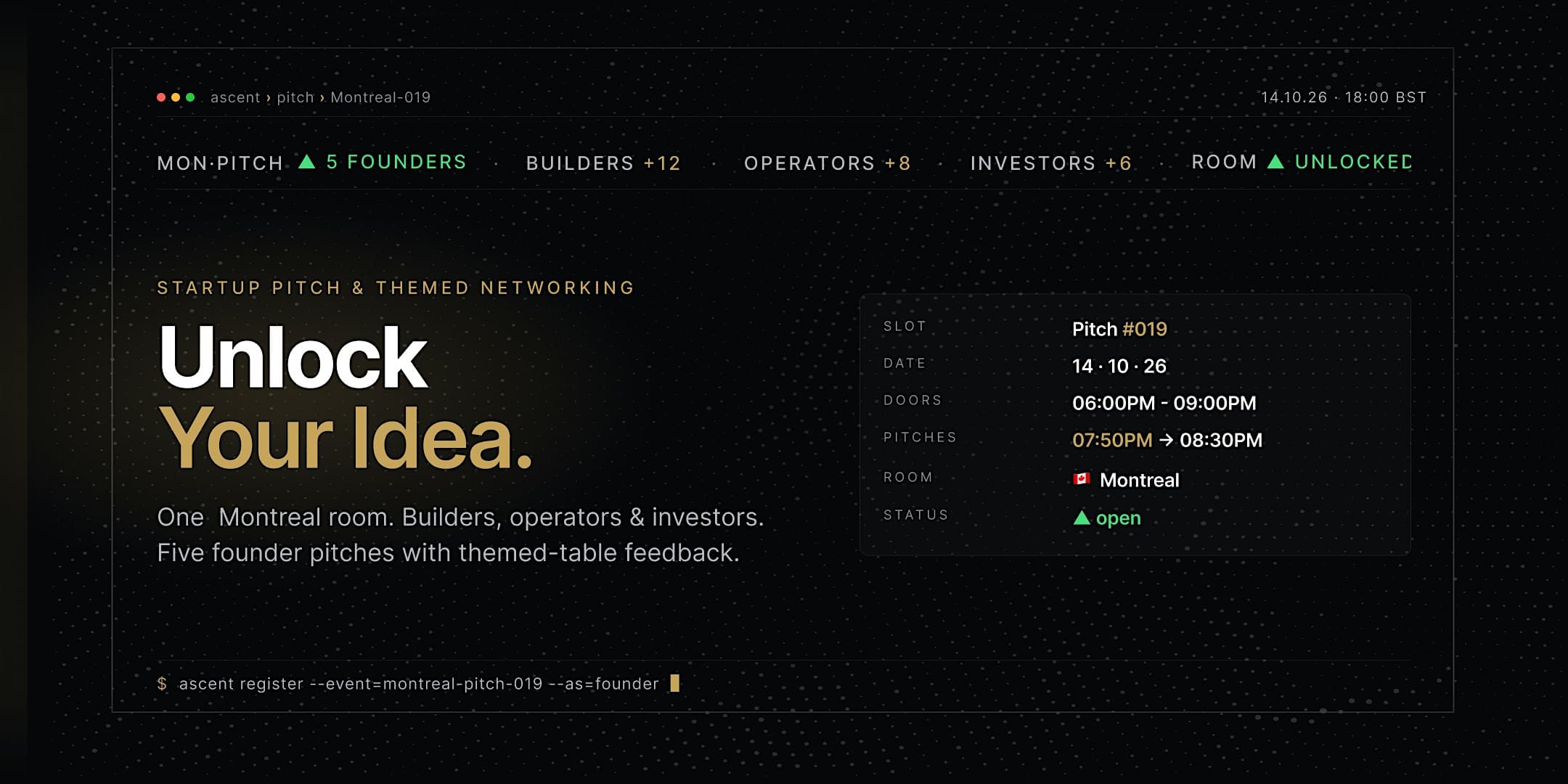
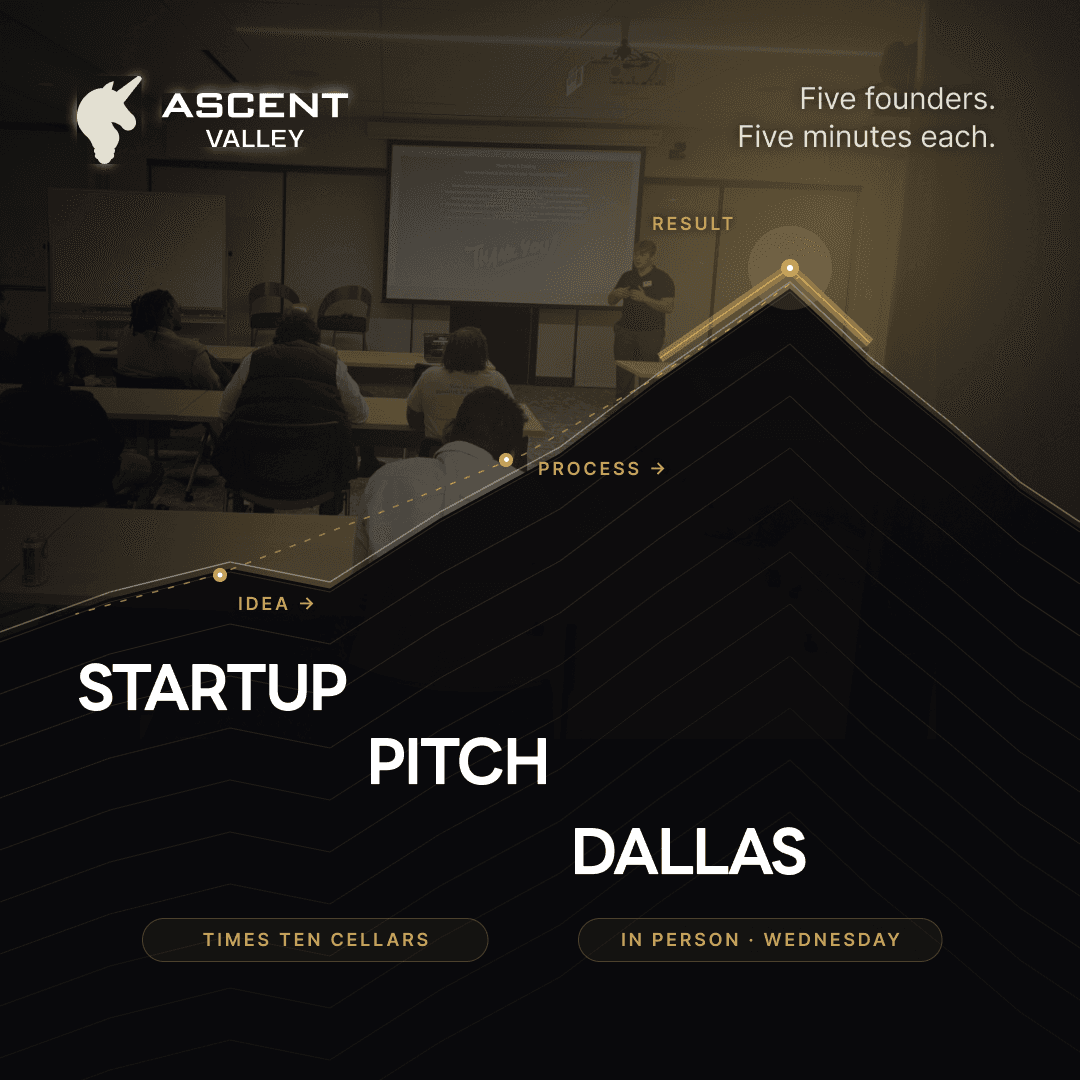
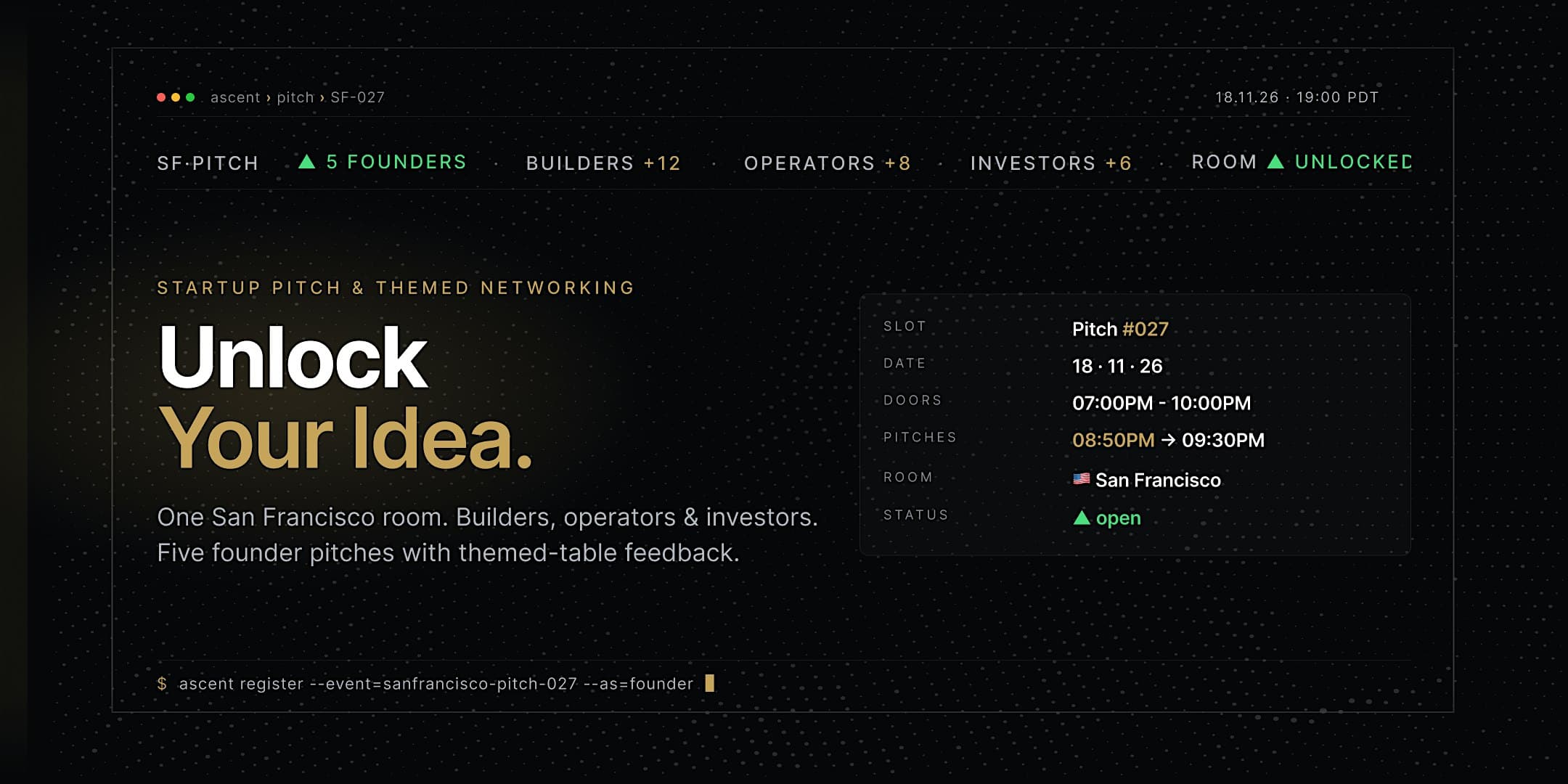
Five founders, five minutes each, then the room asks. A table on a topic the room voted for, and the hour after the stage, which is the one people remember.
How the evening runs
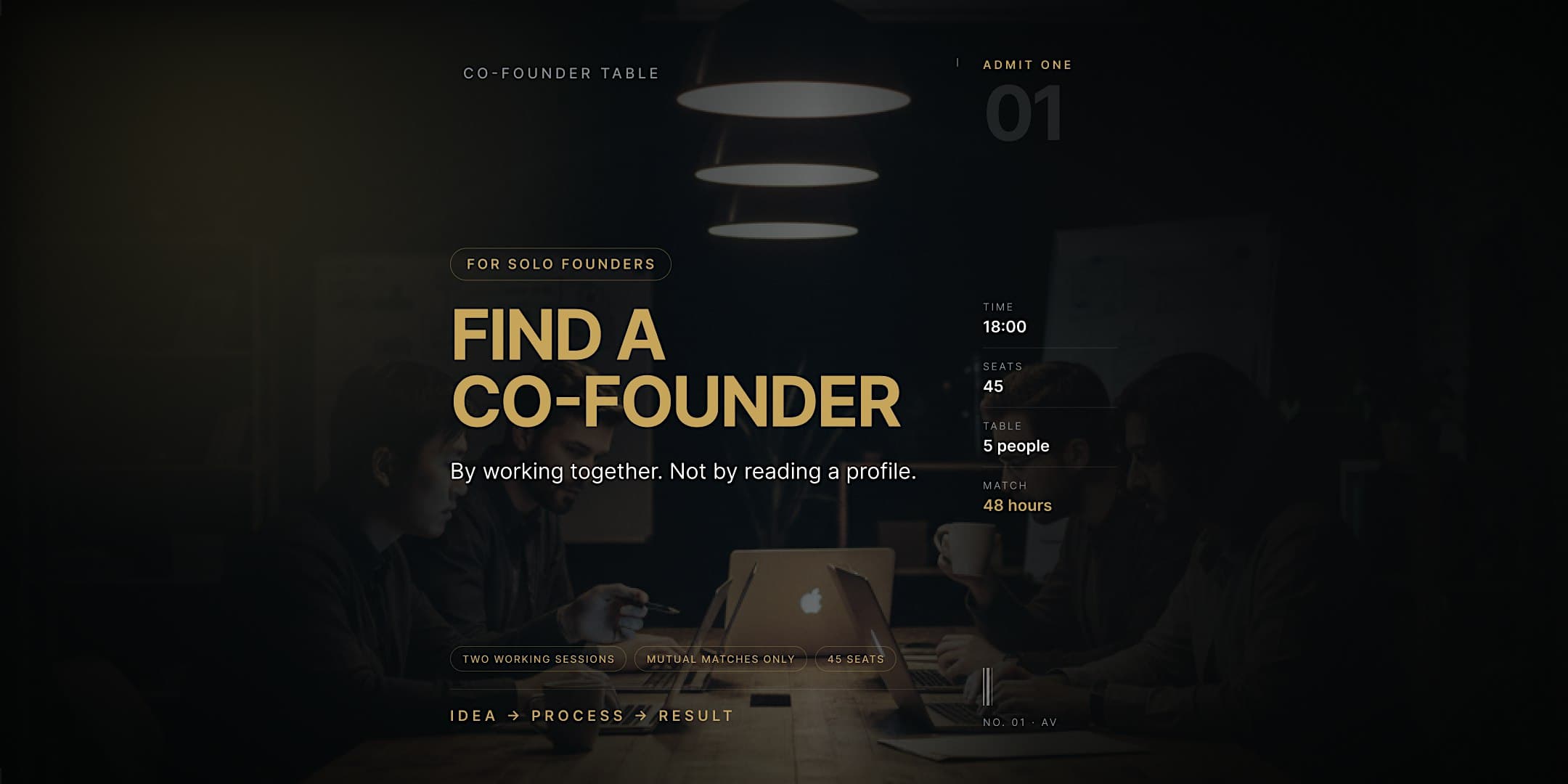
01You arrive, put on a name sticker and take a table on a topic the room voted for. You stay there for the hour instead of doing a lap looking for a gap in someone else's conversation.
02Five founders take the stage, five minutes each. No slides read out loud. Then the room asks, and the questions are the good part.
03The stage ends and the floor stays open for an hour. Nobody is performing any more; that is the hour people actually remember.
04The stage is by application, read by a person. The audience needs only a ticket.
What you leave with
The question you have been quietly avoiding, asked out loud to somebody else, and a look at how they handled it.
A link that keeps working after the night: who else came, a chat for this evening and a recap of who you met.
If you pitched: a profile in our startup directory, read by a person, in front of the funds and angels in the network.
Who it is for
Anyone building something, from the first line of code to Series A, and the people who run a function at a company that is scaling, write the code, do the hiring, or are still deciding whether to start.
Why it is worth itWatching somebody explain their company in five minutes teaches you more about explaining yours than another evening alone with the deck.
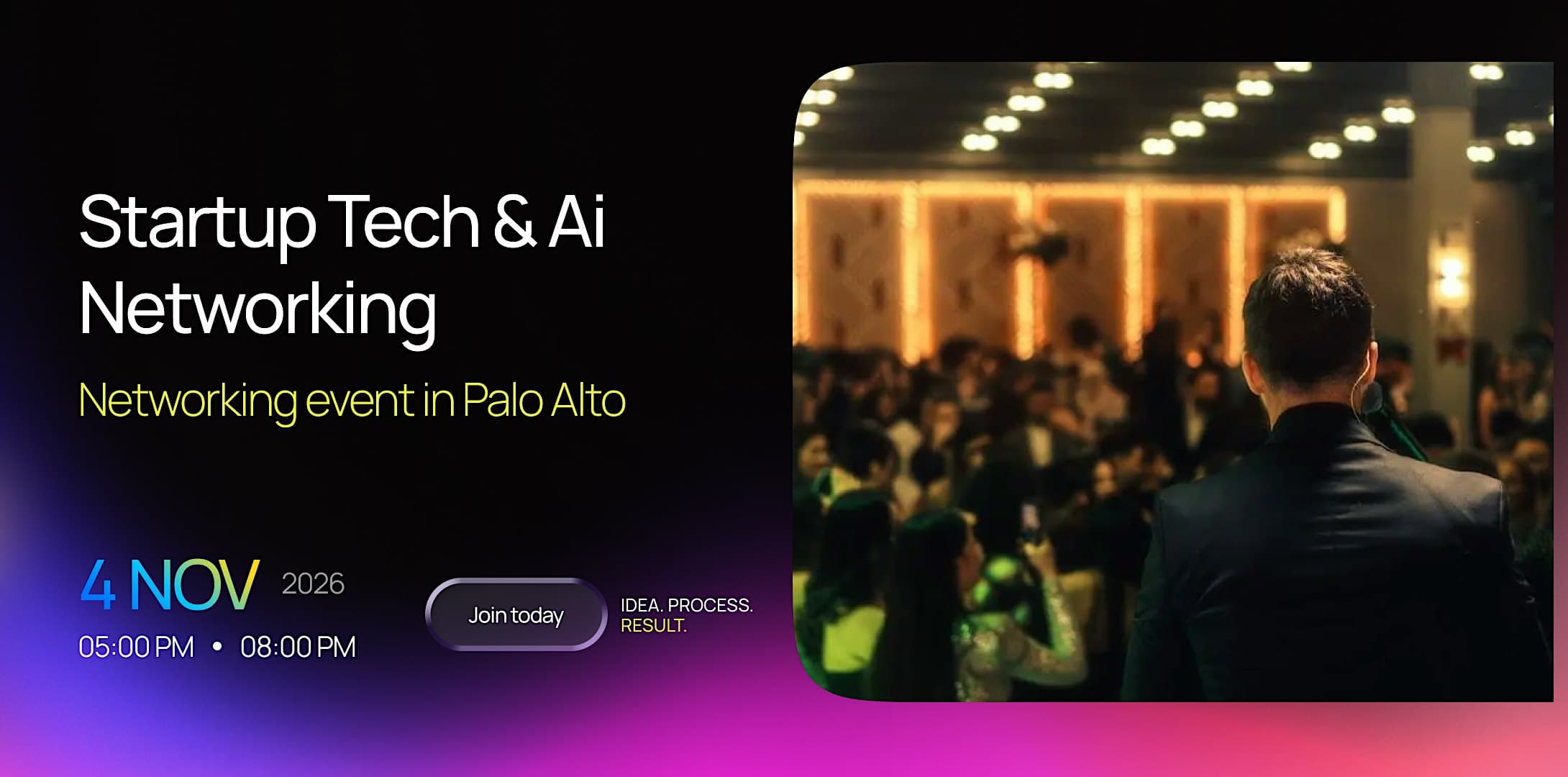
For the people building with AI and technology: tables by stack and problem, five builders on stage for five minutes each, then an open hour.
How the evening runs
01You arrive and take a table by what you are building with: agents, infrastructure, data, developer tools, hardware. Topics are voted before the night.
02Five builders take the stage for five minutes each: what it does, how it is built, what is in the way. The room asks the technical questions.
03Then the floor stays open for an hour, and the conversations that started at the tables finish.
04The stage is by application, read by a person. The audience needs only a ticket.
What you leave with
The people in your city working on the same class of problem.
Which stack decisions other teams regret, heard before you make them.
A shortlist for a hire, a co-founder search or a second opinion on your architecture.
Who it is for
Engineers, technical founders, ML and data people, product managers, and founders looking for their technical half. Built for the people writing the code and shipping the product.
Why it is worth itMost tech meetups are a talk with networking bolted on the end. This one is the other way round.
Met in person, approved on application, checked at the door: three different checks. None of them is a rating.
Community layerIn beta
The network doesn't end when you leave the room.
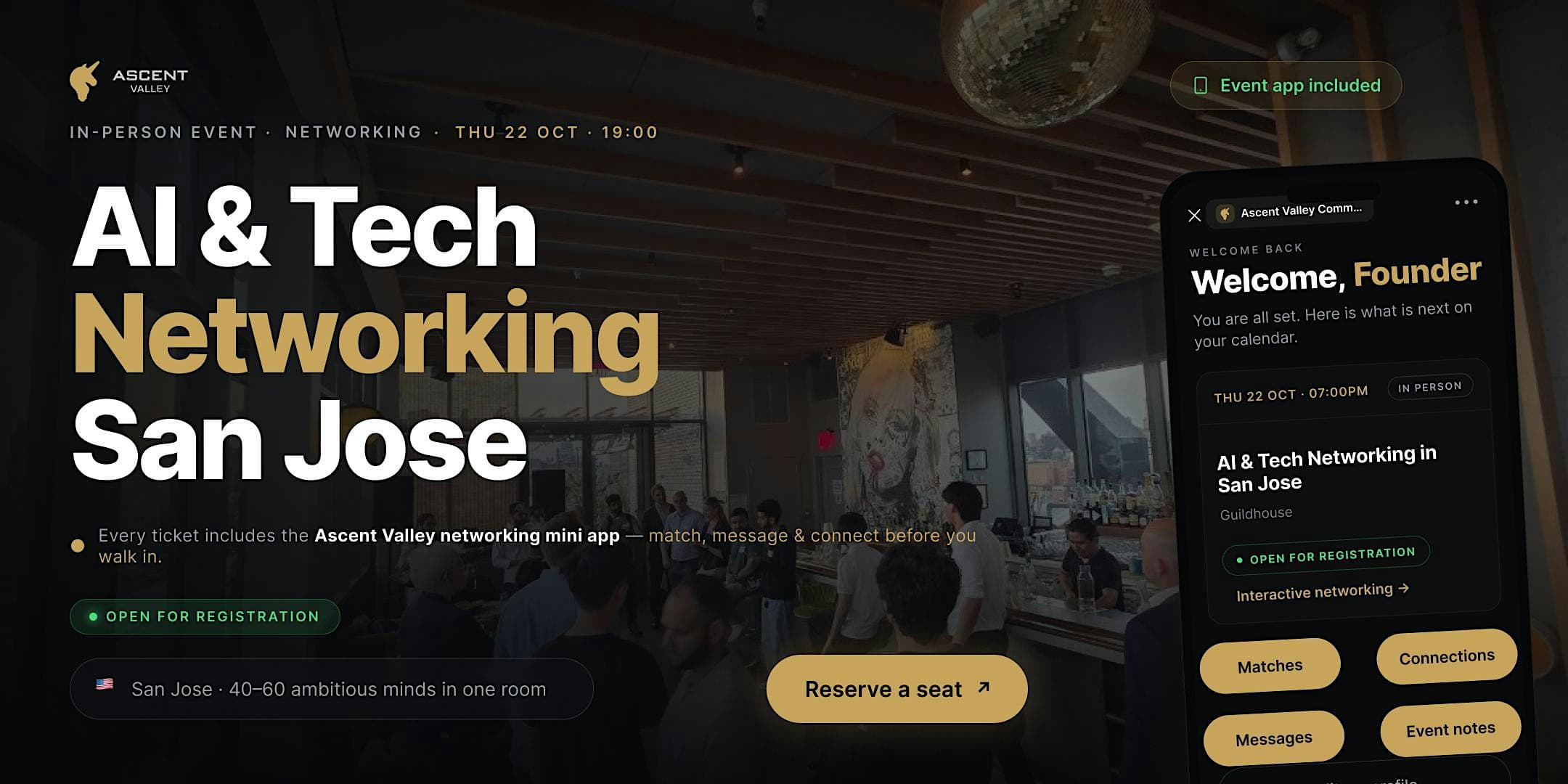
Everyone you meet at an evening lands in the Ascent Valley app: checked in, searchable, and matched to you long after the night is over. Opens in Slack, your browser or Telegram. No new account.
Ascent Valley·Los Angeles·Member directorybeta
Coming on WednesdayLos Angeles · sorted by shared tags
fintech, hiring, co-founder⌘K
FintechAIHiringCo-founderSeedOperators
FFounder · AI infra · pre-seed#AI#HiringComing Wed
No. The room is built around founders, but investors and operators (product, engineering, marketing, people who have done the job) are who founders come to meet. Each format says who it is for, and the event page repeats it for that evening.
Founders from pre-seed to Series A, engineers and product people, operators who have done the job, and investors when the format is Investor Connect or a pitch night. Sectors are declared up front, so you know who you are talking to before you register.
Every guest is checked against a real profile when they register and checked in against the list at the door. It is a check, not a rating: it tells you the people you meet are who they say they are, nothing more.
Can I pitch my startup?
At Pitch Nights and Investor Connect evenings, by application. A ticket lets you attend; a separate application, reviewed by a person, puts you on the list to present. Read how pitching works before you apply.
Sometimes, and we never promise it for a given night. Investors come to Investor Connect and to some pitch nights; they are approved on application and are not used as bait. Introductions to investors are made by us afterwards, through the Monday digest, and we take no percentage of any deal.
How do I register, and where is my ticket?
Open the event page and use its ticket button. It takes you to the platform that sells that evening, Eventbrite or Luma; your ticket and confirmation come from there, to the email you used. Right after the purchase you also get two emails from us: an invitation to our Luma calendar and an invitation to your city's community. Each evening is sold in one place only, and refunds follow that ticket page's terms.
How much does it cost?
Some evenings are free; most are paid. The price is on the event page and on the ticket page, in the local currency. A paid ticket is the filter that keeps the room small enough for conversations to finish.
You are in your city's community from the moment you buy the ticket: the invitation arrives with your purchase, and it opens in Slack, in the browser or in Telegram, three doors to one room. That is where the conversation continues and where the next date is announced. If you pitched, your startup enters our base with the evening and the date on record.
I am new in the city. Is this for me?
Yes. Most people in the room were new somewhere once. Come to a Mixer first: you write your role and your ask on your badge, and the hosts make the introductions.