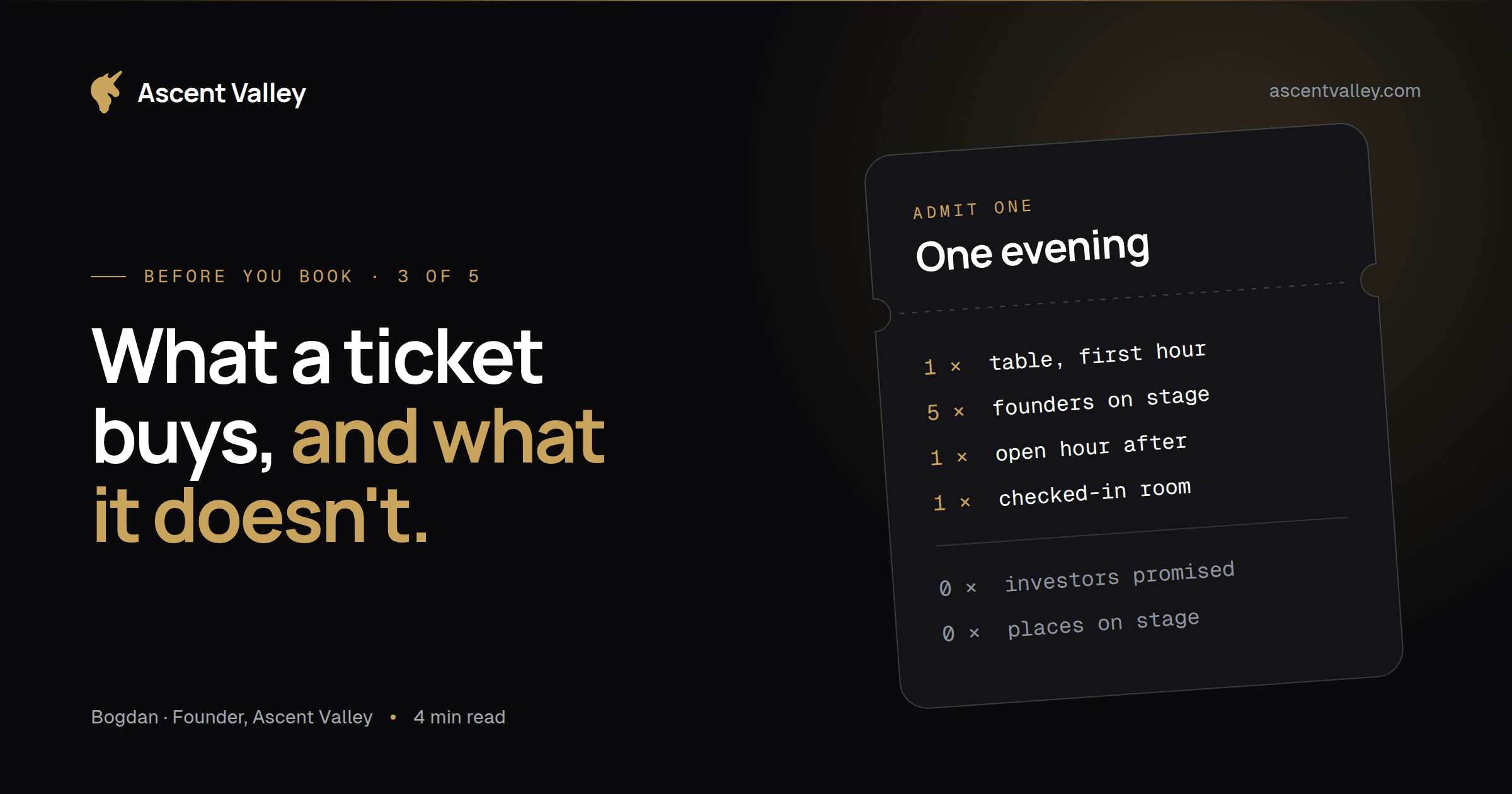
Most founders prepare for a pitch night by preparing a pitch. On a typical evening, five people get the stage. Everyone else in the room needs a different kind of preparation, and it takes about ten minutes.
Here's how our evenings run, in order, and what to do in each part. The shape is the same in each of the 18+ cities where we host.
Before: pick the evening, vote, write one line
Pick by format. A pitch night puts five founders on stage for five minutes each, with questions from the room. AI & Tech evenings seat people by stack and problem. Mixers are for range. Co-founder matching is for people looking for a partner. Read the programme on the event page before you buy.
Vote on the tables. Before each evening, the city votes on the topics for the tables. The topic you vote for is likely the table where you'll spend an hour, so vote for the conversation you need.
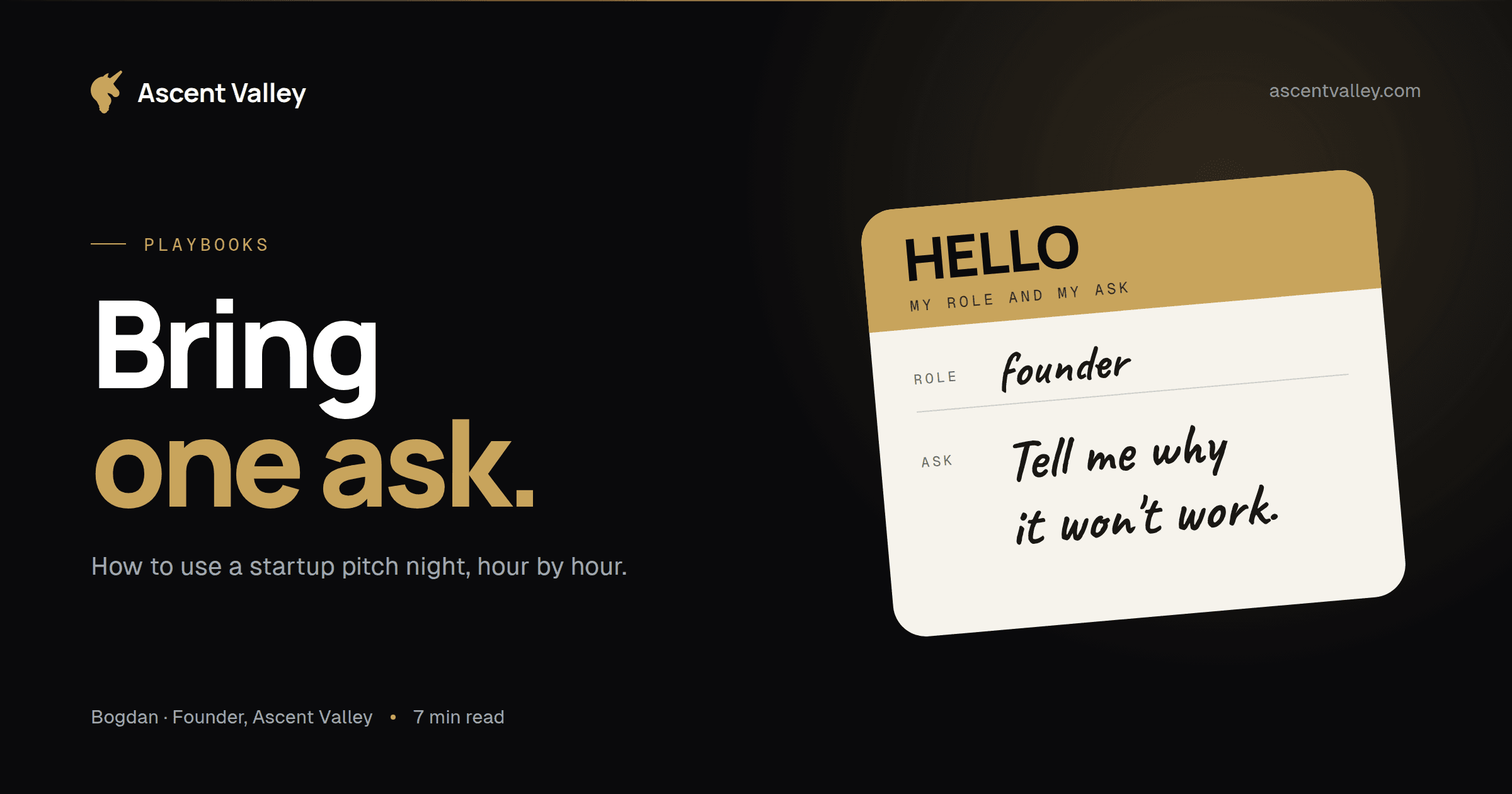
Write your ask in one line. You'll write it on a sticker at the door, so draft it at home. Most asks fit one of four sentences.
| The ask | A line that gets answered |
|---|---|
| I want to grow | Looking for two design partners in dental clinics. B2B scheduling, pre-seed. |
| I came with a problem | Trials stopped converting after we moved the card to step one. Why? |
| I've hit a ceiling | Founder-led sales got us to 20 customers. I don't know how to hand it off. |
| I have an idea, I want your honest take | Payroll for seasonal restaurant staff. Tell me why it won't work. |
The specific version gets answered. "Open to connecting" gets small talk.
At the door
You're checked in against your registration. Every guest is, every evening. Then you write your role and your ask on a sticker and walk to the table closest to what you're building. The sticker does the introduction, so nobody has to perform one.
The first hour: one table
You stay at one table for the hour. It feels slower than a lap of the room, and it produces more, because everyone at the table voted for its topic and came with a reason to talk about it.
One habit makes the hour work. Read the sticker next to you and ask about that person's ask before you explain yours. If you can answer it, answer it. If someone else at the table can, introduce them.
The stage: five founders, five minutes
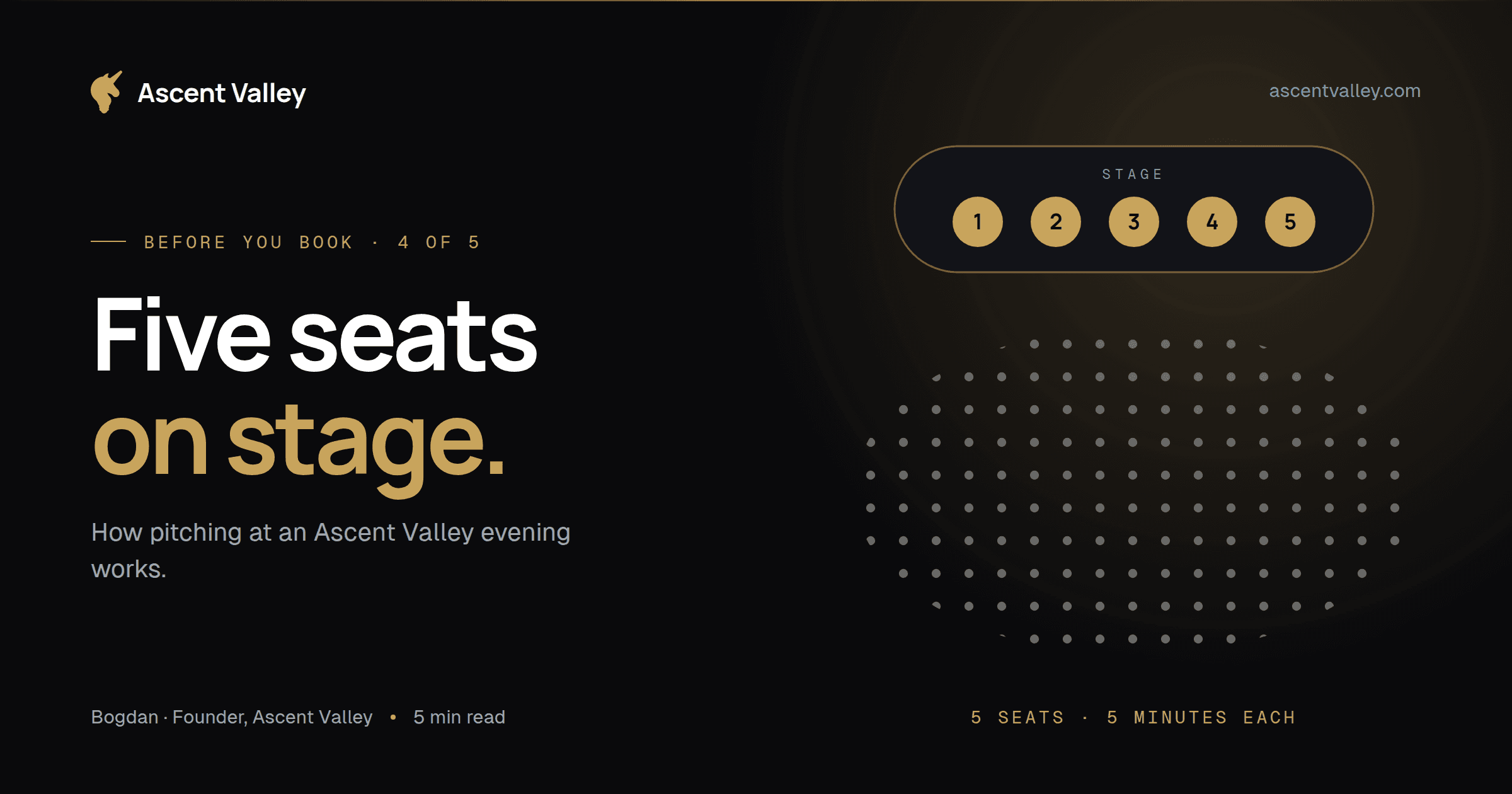
Five founders, five minutes each, no slides read out loud, then questions from the room. There's no judging panel, no prize and no leaderboard.
If you're on stage, lead with the one thing about your company that is true and surprising, and stop early enough to leave time for questions. The questions are the part people remember. Pitching is by application, and a person reads every application. We answer everyone, including the founders we don't pick for that evening.
If you're in the audience, ask the question you'd least like to be asked about your own company. Watching someone else handle it is the cheapest rehearsal you'll get.
The hour after
The stage ends, nobody is performing any more, and the floor stays open. Most second conversations start here. Find the two people you want to talk to again and tell them so before they leave.
After the evening
- Your city space. The ticket comes with an invitation to your city's community space (In beta). It opens in Slack, in the browser or in Telegram. The conversation continues there, and the next date is announced there.
- If you pitched, your company enters our startup base with the evening and the date on record. Investors approved on application see it in the Monday digest, filtered to their stage, sector and geography. You choose whether you're in the digest and can leave any time.
- Introductions are made by us, when a company fits and both sides want one. Never cold. We take no percentage of any deal. If someone offers to introduce you to investors on our behalf, check with us first.
If you're an investor or an operator
Investors meet people before they meet a deck. Investor seats are approved on application, and your presence is never used as bait to sell tickets. When you want an introduction, ask us and we'll make it.
Operators are often the only people in the room who can answer a founder's question the same evening. Pick the table where that's true. It's also the quickest way to see which teams you'd want to work with.
Bring one ask. The next evenings are on the events calendar.