Some are. Most aren't. You can usually tell which from the event page, before you spend the evening.
In 2023 TechCrunch asked 52 founders whether founder events were worth their time. 19% wanted to attend more, 28% planned to keep the same pace, and 26% planned to attend fewer. The complaints repeated: time taken from building, low quality, and the same self-promotional conversation over and over. The praise repeated too. Advice from someone who has been there, or one warm introduction, was the reason people kept going.
Our stake: we run evenings like these in 18+ cities. Read what follows as the filter we'd want you to apply to us.
Price the evening properly
The ticket is the small part. The real cost is three hours in the room, the trip both ways, and the work you didn't do that night. An event is worth it when it gives you something you can't get at your desk: a reaction from a stranger with no reason to be kind, or an answer from someone who solved your problem last year.
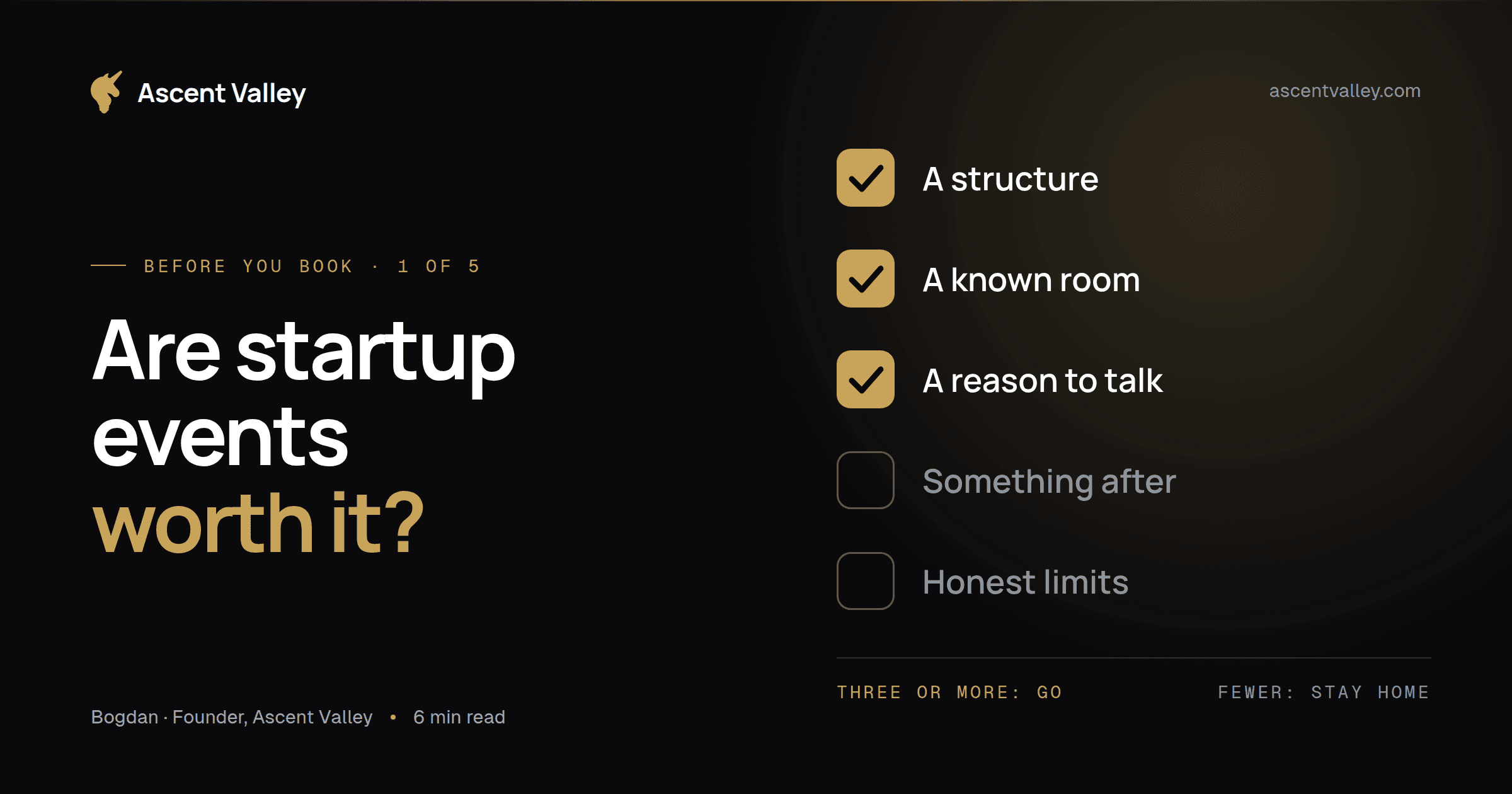
Five checks you can run from the event page
- Is there a structure? Tables, a stage, a format with a start and an end. A room with only a start time rewards whoever talks loudest.
- Do you know who will be there? A guest list, roles, or a door that checks people in. "Founders and investors welcome" tells you nothing.
- Is there a reason to talk that isn't small talk? A topic, a stated ask, a problem on the table.
- Does anything continue afterwards? A place the conversation moves to, or a record of who you met.
- Does the organizer say what they don't promise? A page that guarantees investors or funding is selling something else.
Three or more, and the evening is probably worth it. One or none, stay home and ship.
When to stay home
- You need one specific investor. Go to that fund's own event, or ask someone for a warm introduction.
- You're inside a launch week. The room will be there next month.
- You can't say your ask in one line yet. Write it first.
- The page promises funding, customers or "investors waiting". Nobody can promise that honestly.
How our evenings score
| Check | What happens at our evenings |
|---|---|
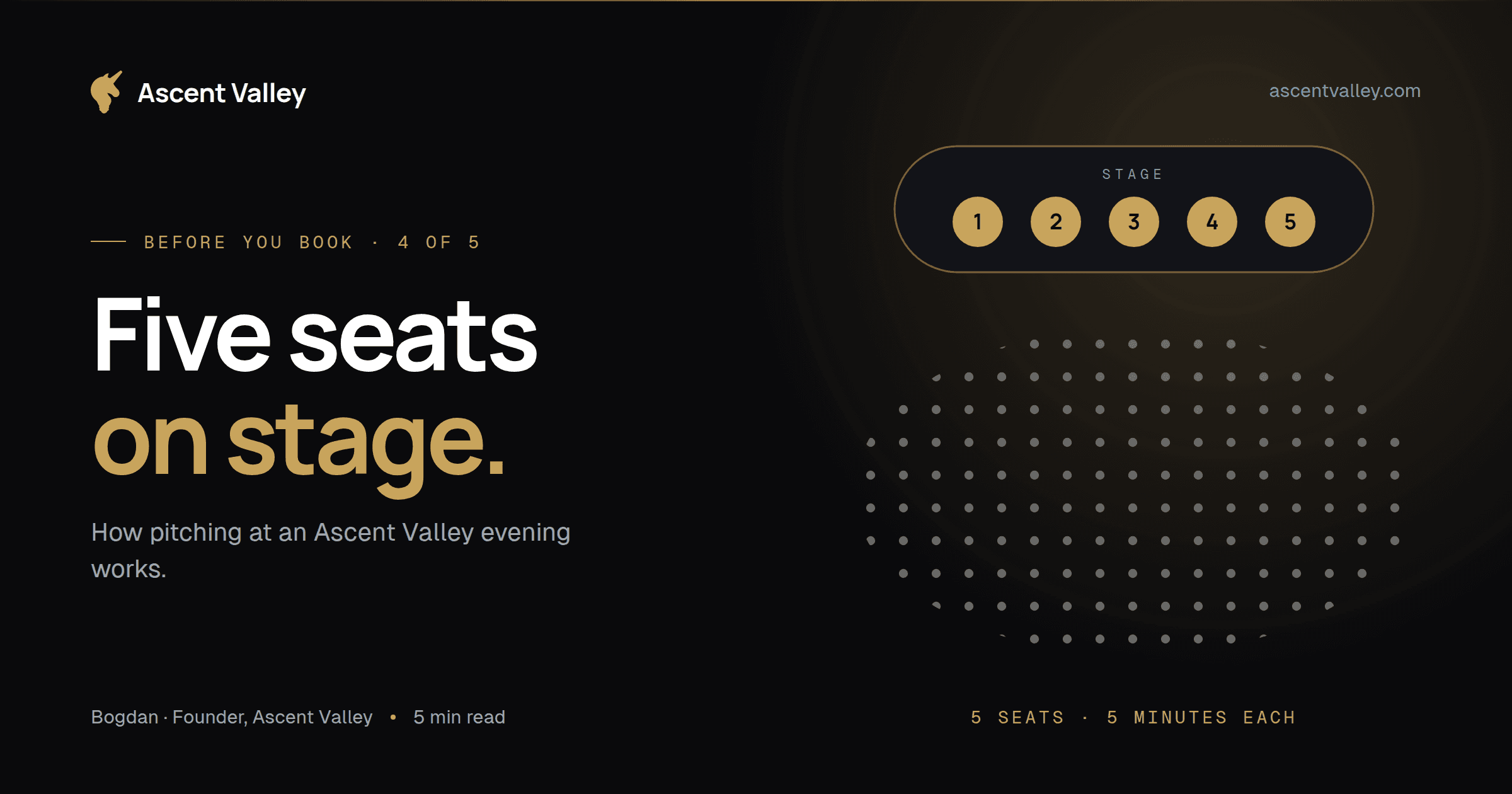
| Structure | The first hour at a table on a topic your city voted for. Then five founders, five minutes each, with questions from the room. Then an open hour. |
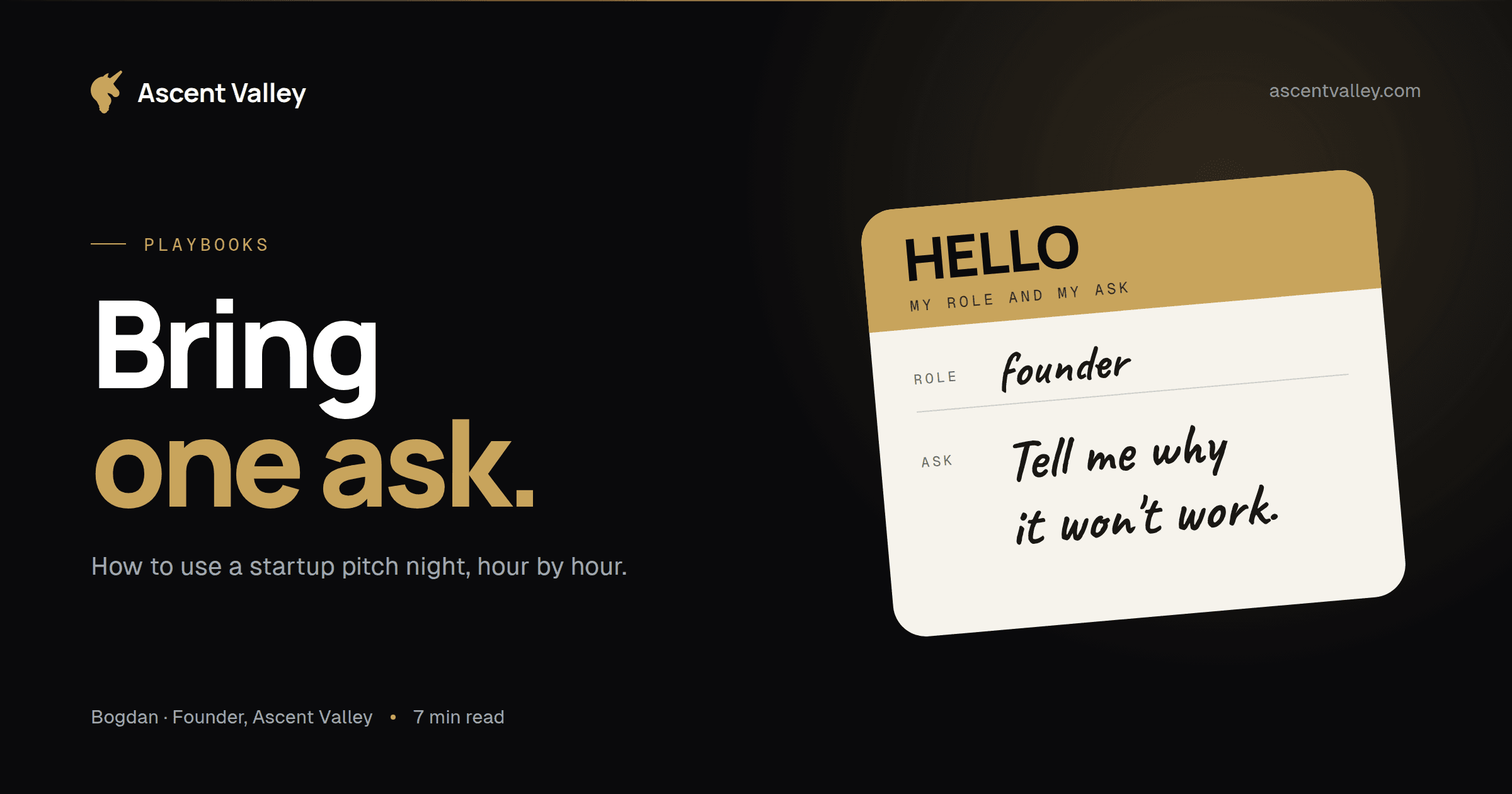
| Who's there | Every guest is checked in at the door and writes a role and an ask on a sticker. |
| A reason to talk | The ask on the sticker. Most fit one of four: I want to grow. I came with a problem. I've hit a ceiling. I have an idea, I want your honest take. |
| Afterwards | An invitation to your city's community space (In beta). If you pitched, your company enters our startup base with the evening and the date on record. |
| What we don't promise | An investor in the room on any given evening. A judging panel or a prize. A guest list in advance. |
Where we're the wrong room: if you need a guaranteed investor meeting this month, we can't give you one. Be wary of anyone who says they can.
Quick answers
- Are networking events worth it for early-stage founders?
- When the room has a structure and you arrive with one specific ask. Without both, usually not.
- Can I come alone?
- Yes. The sticker and the table exist so nobody has to open with small talk.
- Will investors be there?
- Sometimes. We never promise it for a given evening.
- How often should I go?
- We'd pick one recurring room for a quarter over five one-off events. The second visit is when people start to recognise you.